

Carpet Area vs Built-Up Area vs Super Built-Up Area: Know the Real Difference
Sep 1, 2026
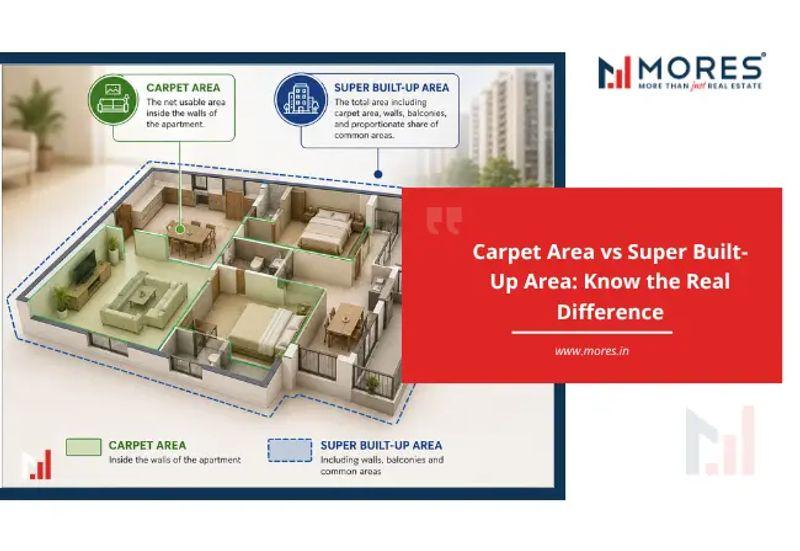
When purchasing a home, there are a number of figures to be compared, but among the most important is the area of the apartment. Carpet area, built-up area, or super built-up area can all be mentioned in property advertisements. It would be wrong to assume that these terms are 'synonymous' with each other. Knowing the difference between Carpet Area vs Super Built-Up Area will help buyers understand what it is and compare properties easily.
As per the Real Estate (Regulation and Development) Act, 2016 (RERA), carpet area is defined as per the statute. The Act also stipulates the number, type, and carpet area of apartments being offered for sale, the area of exclusive balconies, verandahs, and open terraces (where applicable). On the other hand, it is not advisable for buyers to consider built-up area or super built-up area to have the same definition in all projects. Their composition needs to be verified in the corresponding documents and in the framework of regulations.
What is Carpet Area?
The meaning of Carpet Area is as per section 2(k) of the RERA Act. It refers to the ' usable floor area' of an apartment, after applying any deductions required by the legislation. The definition excludes areas under service shafts, exclusive balcony/verandah areas, and exclusive open terrace areas. This consists of the space within the partition walls of an apartment.
An exclusive balcony or verandah, or open terrace, is a part of the net usable floor area and is an area exclusively for the use of the allottee, and is described separately in the Act.
The meaning of carpet area is more accurate than the common understanding of the space under the carpet. It is a statutory measurement for RERA-covered apartments, in compliance with the inclusions/exclusions provided in the Act.
The key difference between Carpet Area vs Super Built-Up Area is that carpet area is a legally specified term that defines the net usable floor space of an apartment; other quoted areas might include other components.
What Is Built-Up Area?
Though built-up area has been extensively used in property transactions, there is no similar definition of built-up area in the central RERA Act Section 2(k). Thus, it is not the case that a buyer can take it for granted that the term is applied in a standard fashion in all projects.
The specific makeup of the built-up area needs to be confirmed with the project’s plans, agreement to sell, allotment documents, disclosures, or other documentation that is relevant. Depending on the document and project terminology, it may be a larger measurement than carpet area, but all of its elements must be verified rather than assumed.
Before relying on a built-up area figure, ask:
- How was the figure measured?
- Which components are included?
- Is the figure stated separately from the RERA carpet area?
- Are exclusive balconies, verandahs, or terraces shown separately?
- Is a written area breakdown available?
With these questions, you can compare Carpet Area vs Super Built-Up Area in relation to a document rather than an assumption based on a single headline.
What Is Super Built-Up Area?
The meaning of super built-up area also needs to be verified for each project. The carpet area is defined in the central RERA Act, section 2(k), while the super built-up area is not defined. Therefore, the meaning of the term should not be inferred to be the same in all projects, states, or agreements.
The Haryana Real Estate Regulatory Authority (GRHA), Gurugram, has published official regulations in 2021 that outline these features. Among those regulations was that definitions of “super area” in various builder-buyer contracts were ambiguous and widely varied. They also emphasised the importance of providing details and a breakdown of the components included in such an area.
This is a Haryana-specific regulatory example and should not be presented as a uniform rule for every Indian project. It does, however, give a good indication of an important principle – if a wider term like “super area” or “super built-up area” is employed, buyers should seek to understand precisely what is included in the figure.
To determine the definition of the super built-up area for a specific apartment, please consult the agreement, project disclosures, approved plans, and written area statement. Don't make decisions based on an ad only.

This table does not mean that the built-up area or the super built-up area is irrelevant. It means that the wording alone does not establish a universal composition. The most reliable approach to Carpet Area vs Super Built-Up Area is to compare the definitions and component-wise break-ups behind the figures.
Why Carpet Area Matters Under RERA
RERA Act, Section 4(2)(h) mandates promoters to submit information about the apartments to be sold while applying for the project registration. The information is related to the number, type, and carpet area of the apartments, in addition to the area of exclusive balcony/verandah areas and exclusive open terrace areas appurtenant to the apartment (where applicable).
The meaning of the carpet area becomes crucial in this requirement. It provides a legal basis to the buyer for the net usable area of the apartment and also sets apart exclusive external spaces from that floor area.
There may also be additional requirements at the state level. For instance, the term "disclosure of apartment size" in Haryana RERA materials is used even if terms like "super area," "super built-up area," or "built-up area" are used. These obligations should be interpreted in the context of the jurisdiction to which they are due.
Why the Difference Matters
The advertised size doesn't always correspond to the usable size of the apartment. Comparing only the headline numbers may give a false impression if two projects display different bases for measurement.
A sound comparison should examine:
- The disclosed carpet area
- Any exclusive balcony or verandah area
- Any exclusive open terrace area
- The stated definition of built-up area, if quoted
- The definition and component-wise break-up of the super built-up area, if quoted
- The price and the area basis from which it is calculated and/or presented
This makes Carpet Area vs Super Built-Up Area relevant not only to terminology but also to evaluating value, space, and contractual clarity.
Common pitfalls and traps to avoid
Do not consider carpet area, built-up area, and super built-up area to be the same. Beware of assuming that a number with the most square feet is the largest apartment available. Don't use a standard conversion percentage unless it has been referenced in the project documents. Last, use only words as a method of explanation only if there is no better alternative; if there is an important area detail, it should be recorded in writing. For more information and expert guidance on this topic, consult with Mores, a trusted real estate partner.
Conclusion
The first step towards understanding the concept of Carpet Area vs Super Built-Up Area is to understand the difference between carpet area and other terms defined in the statute. As per the definition provided in Section 2(k) of the RERA Act, the carpet area refers to the actual area available for use after considering the areas that are included and the areas that are excluded. Section 4(2)(h) also mandates an apartment area of carpet and, where applicable, an exclusive balcony/verandah and open terrace area.
The terms built-up area and super built-up area do not necessarily mean the same thing. They should be checked from the relevant regulations and project documentation for the definitions and components. The detailed breakup from the Haryana RERA, Gurugram, itself gives an idea of why it is important to have a detailed breakup when super area is used.
Make sure you start with the carpet area disclosed – understand the carpet area meaning as outlined in the statute – learn the super built-up area meaning as it is applied to the project in question – and get a written explanation for each of the larger carpet area figures. When a document-based CA vs SBA comparison is done, it will reveal to the buyer what each number represents and facilitate a more accurate comparison of properties.
Recent Blogs
Get Expert Property Advice



Assistant


