
EXPLORE REAL ESTATE INSIGHTS FOR SMART MOVES AND INFORMED CHOICES
Your Guide to Trends, Market Tips, and Property Investment Advice
Retail Growth in Tier 2 and Tier 3 Cities in India and the Future of Real Estate
Dec 1, 2025
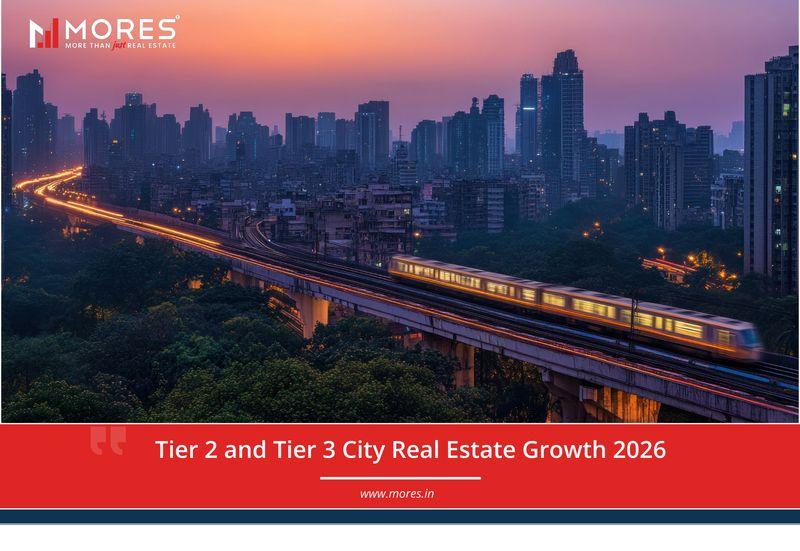
The retail industry in India is evolving swiftly. Previously focused on regions the emphasis is now moving towards emerging urban centers. A recent report by the Times of India emphasizes that real estate growth in Tier 2 and Tier 3 cities by 2026 is playing a role in the expansion of organised retail and property development. This transition signifies a socio- transformation, fueled by increasing disposable incomes enhanced infrastructure and growing digital access, beyond the metro areas. Customers in these regions continuously seek high-end experiences, prestigious brands and outfitted shopping environments—choices that were originally linked with metropolitan hubs such, as Mumbai, Delhi or Bengaluru.
What makes this shift extraordinary is the speed at which it is happening. Developers, retailers and investors are recognizing that the next phase of India’s consumption boom will be fueled by regions once considered markets. With urbanization enhanced connectivity and thriving local entrepreneurship these towns are evolving into commercial hubs. In this article we examine the growth of estate in non-metro India the factors propelling retail expansion in smaller Indian cities and the outlook, for 2026 and the future.
The Retail Growth Surge in Small Cities: A brief overview
Retail growth in India has extended beyond regions. The increased number of signed leases has enhanced retailers’ confidence.
Customers in cities like, Raipur, Visakhapatnam, Bhubaneswar, Indore, Jaipur, Ludhiana, and Lucknow are consistently searching retail spaces. Studies indicate that shoppers, in these areas favor lifestyle-oriented venues that integrate shopping, entertainment and dining experiences, of solely transactional retail setups.
This change is propelled by advancements in infrastructure increasing incomes and greater brand awareness in these growing areas boosting the demand for retail stores, in Tier 2 and Tier 3 cities.
Real Estate Growth & Transformation Beyond Metro Cities
India’s property sector is experiencing a shift that extends beyond the major metropolitan areas. There is an increase in construction projects—covering both commercial sectors—taking place in Tier 2 and Tier 3 cities. These developing urban hubs are attracting investor attention because of infrastructure and an expanding customer base factors that are speeding up their swift growth, into dynamic real estate markets.
Recent research indicates that a significant portion of the nation’s real estate expansion outside metropolitan areas will come from these non-metropolitan zones. Elements like operational costs, land accessibility, increasing incomes and the ambitions of younger generations are encouraging retailers and developers to seek prospects, beyond established metro locations. Consequently shopping centers, mixed-use projects and contemporary residential neighborhoods are becoming more common in cities previously regarded as secondary.
Furthermore extended forecasts for India’s real estate market emphasize the potential presented by these centers. By 2047 the sector is projected to hit a trillion dollars with a portion of this growth fueled by the expansion of Tier 2 and Tier 3 cities. Enhancements in connectivity, infrastructure projects supported by the government better transportation systems and the broadening of job opportunities—resulting from the increase, in hybrid working models—are all propelling this change.
Together these patterns indicate a chapter, for real estate with rising cities poised to significantly contribute to the nation’s economic growth and urban progress in the near future.
Reasons Behind the Surge in Demand for Retail Outlets in Tier 2 & 3 Cities
Several elements are fueling the growth of estate in smaller towns. Below are some of the contributors:
• Hike in incomes & Aspirations: As incomes rise in these regions more consumers are seeking lifestyle and leisure spending.
• Improved Infrastructure: Enhanced roadways, airport connections, effective public transit and utility services boost the attractiveness of these cities to residents and investors alike.
• Brand Penetration: Increasingly national and international brands are entering these markets expecting demand fueled by a urbanizing population.
• Experiential Retail: The retail models, in these areas are evolving. Developers are designing mixed-use spaces that integrate shopping, eating and entertainment responding to changing consumer tastes.
• Commercial Property Collaborations: The expansion of Global Capability Centers (GCCs) and IT parks in Tier 2 and 3 cities is creating demand not for office spaces but additionally, for retail, residential and mixed-use real estate.
These are key reasons for retail growth in Tier 2 & 3 cities.
Commercial Real Estate Trends Driving Immense Growth
Expansion is not confined to retail commercial real estate, in city centers is also seeing an upswing. Real estate firms are capitalizing on the increasing influx of businesses (GCCs) relocating to Tier 2 and Tier 3 cities.
According to Geosquare, companies like Awfis, Smartworks and Incuspaze are quickly expanding their footprint, in these areas. The expenses for land and buildings in these cities with increasing demand render them appealing locations for the expansion of commercial real estate, in India.
Indian Retail Sector Transformation by 2026
Anticipating 2026 numerous developments are anticipated to improve real estate collaboration, in India’s Tier 2 and Tier 3 centers:
• Retail Growth in various Urban Areas: As retailers consolidate their presence a plan involving rollout across cities is expected, moving beyond just scattered non-metro regions.
• Introduction of High-End Brands: Luxury and upscale bridge brands are entering markets, driven by consumers with goals.
• Mixed-Use Projects: Retail developers intend to boost investments, in mixed-use ventures that merge retail, entertainment, co-working areas and residential spaces to enhance footfall and revenue.
• Hyperlocal & Quick Commerce: The demand for fulfilment centers and retail outlets in Tier 2 cities is likely to increase because of accelerated delivery methods (, like 10-minute delivery).
• Institutional Investments: As investor confidence grows in -metro areas capital flowing into retail real estate, in Tier 2 and 3 cities is likely to increase substantially.
These elements are driving the transformation of India’s sector in 2026 and impacting the future of retail stores and the real estate market.
Real Estate Growth in Tier 2 & Tier 3 — Key Examples
Certain particular cities are currently at the forefront:
• Raipur, Vizag & Bhubaneswar: Named in the TOI report as key hubs for organised retail real estate.
• Ludhiana, Indore, Jaipur & Lucknow: There is a rise in leasing demand, in these Tier 2 cities, driven by higher incomes and better transport connectivity.
• Coimbatore, Kochi, Surat, Nagpur: Recognized for their emerging commercial and residential real estate opportunities, driven by affordability and infrastructure.
Broader Impacts on the Real Estate Industry
The rise in activity, beyond centers is changing the perspectives of developers, investors and brands regarding real estate:
• Portfolio Diversification: Developers are turning attention to Tier 2/3 cities to mitigate risk and access new markets.
• Long-Term Value: Since real estate in areas is either fully taken or costly smaller towns provide greater opportunities, for expansion and wealth generation.
• Employment Generation & Economic Advancement: The growth of retail, GCCs and mixed-use developments creates job openings improving the surroundings.
• Urbanization: Less populous cities are better equipped to manage growth compared to congested metropolitan areas rendering them appealing for well-rounded urban progress.
Challenges of Retail Real Estate: A Quick Assessment
Despite the positive outlook of retail investors, there are certain challenges in the retail-real estate transition:
1. Demand Volatility: Smaller cities are likely to be more sensitive to the economic slowdowns.
2. Land Acquisition & Regulatory Hurdles: Land acquisition and navigation of regulations may be complicated in non-metro markets.
3. Customer Behavior: Although aspirational consumers are present, in Tier 3 cities they might not back luxury retail models.
4. Retailer Risk: Brands entering markets might overestimate demand resulting in unfavorable consequences.
The growth of retail in Tier 2 and Tier 3 cities is more than a trend—it can be regarded as the new frontier, for India’s real estate market. A combination of increasing incomes, improved infrastructure, ambitious consumers and business investments is fueling expansion outside the major metropolitan areas.
Conclusion
As we head into 2026, the retail sector’s transformation in smaller cities could reshape the commercial real estate landscape for years to come. For developers, retailers, and investors alike, these emerging markets present both enormous opportunity and the chance to build for India’s next phase of urban growth, highlighting the future of retail shops and real estate industry.
Recent Blogs


Assistant


