



EXPLORE REAL ESTATE INSIGHTS FOR SMART MOVES AND INFORMED CHOICES
Your Guide to Trends, Market Tips, and Property Investment Advice
Investor’s guide to evaluate rental property ROI potential
Dec 23, 2024
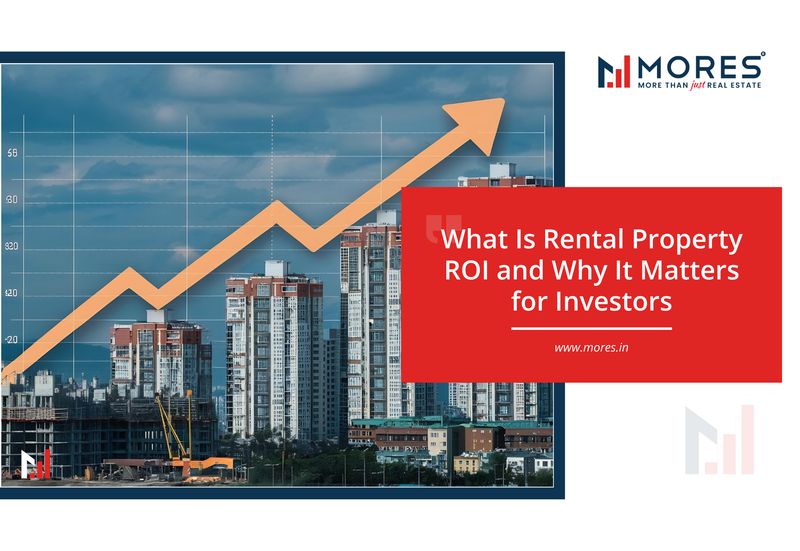
Investing in the rental property may seem to be a crucial decision, but, evaluating its ROI should be the chief consideration. Diversification of investment as compared to the traditional assets can be explored through rental properties. From offering access to a passive income reserve and addressing steady cash flow, prime investment location, the appreciation value of property can be appreciated. As a part of this blog, we will evaluate the ROI of property so that informed decision-making while investing.
Rental Property ROI Explained: A quick assessment
ROI or Returns on Investment, in general implication refers to the efficiency at which property generates returns based on its current price. The whole idea is to measure profitability of investment expected out of rental property through consistent appreciation. In order to uncover profitable investment, higher returns should be evaluated through real estate ROI metrics. The major advantage of evaluating ROI before investment is to avoid potential losses in the future.
Factors that influence ROI of a property
Return on Investment (ROI) is one of the most critical metrics for evaluating rental property performance. Several factors directly impact ROI, starting with location. Properties in areas with strong employment opportunities, infrastructure development, and access to schools and transportation typically yield higher returns.
Purchase price plays a major role—buying at the right market value or during pre-launch phases often improves ROI. Rental demand and vacancy rates also influence profitability; consistent occupancy ensures steady cash flow. Additionally, operating costs such as maintenance, property management fees, taxes, and insurance can either enhance or reduce net returns. Apart from this, local regulations, appreciation potential, interest rates and market trends also impact ROI of rental property significantly. Alternatively, if the appreciation potential of property with low upfront cost is high, the scope of long-term returns can be expected.
How to calculate ROI of rental property?
Investors can evaluate the performance of rental property by calculating ROI. One of the simple ways to calculate ROI is:
ROI = (Annual Net Profit / Total Investment Cost) × 100
To understand the ROI calculation, let’s consider a scenario: If annual rent of the property generated is ₹8, 00,000 and expenses are estimated as ₹4, 00,000, then, the net profit will be ₹4, 00,000. However, when the total investment is ₹40,00,000, then:
ROI = (4,00,000 / 40,00,000) × 100 = 10% ROI
On an average, the returns on invested capital can be measured for financed properties by investors through cash-on-cash ROI.
Benefits of ROI calculation for real estate transactions
It becomes easier for investors to proceed with the smart decision-making after ROI calculation. Apart from boosting confidence, it provides clarity to choose the rental property with the better returns. Moreover, the investors can assess various investment prospects with utmost precision. As a result, identifying profitable real estate opportunities becomes comparatively easier. Undoubtedly, emotional bias or assumptions-based investment decision-making can be avoided through factual ROI analysis.
Investors can align long-term goals with property investment while forecasting income and risk management through financial planning. ROI plays a vital role in the error-free financial planning. From the perspective of lenders and partner, transparency and credibility are boosted through ROI metrics. In totality, improved capital allocation and wealth creation are assured by understanding ROI.
Points to consider for improving the ROI potential of Rental Property
- Investors should prioritize high-visibility location with improved rental prospects to maximize ROI. Considering projects developed near transit corridors, educational institutes or business hubs boosts rental and occupancy potential.
- Cost control is a significant factor that maximizes ROI. This becomes possible when the investment with the low-maintenance requirements, modern amenities, and energy-efficient designs is chosen. By reducing expenses and aligning rent reviews with the market trends boost the property value.
- Relying on professional property management can enhance ROI. From timely rent collection, and minimized tenant turnover, to efficient property maintenance, balanced returns can be attained. It is advisable for long-term investors to focus on appreciation potential and rental yield for better ROI.
Common mistakes that investors should avoid while choosing rental property
Considering low priced property over rental demand is among the major mistakes committed by investors. The ROI of property with comparatively lesser price in low-demand area is likely to reduce due to the consistent vacancies. The next investment mistake that people often make pertains to underestimating expenses. It further implies that unexpected maintenance, repairs, and taxes should be checked while choosing the rental property.
Apart from these factors, overlooking market research, and future development plans can also reduce the ROI prospects. For instance, the rental laws, zoning regulations, or property title clarity are ignored by many investors that lead to increased expenses and low ROI potential. Undoubtedly, emotional buying, wherein, the property purchase is solely dependent on personal preferences can reduce the potential of returns. On the contrary, the logical investment plans to finalize the rental property can offer better returns.
Expert opinion about choosing property with higher ROI
According to the real estate experts, location, pricing, and demand equally influence the ROI potential of a rental property. In the emerging neighborhood, mid-segment units are comparatively higher in demand as compared to luxury properties. This is generally due to the consistent demand and the wider tenant pools.
The seasoned real estate professionals also recommend the investors to review market conditions before addressing short-term and long-term rental strategies. They also suggest that the data-driven decision-making, market forecasting, and the ROI analysis should be considered while investing on rental property. The real estate projects that have been aligned with infrastructure plans and urban growth plans have potential to improve ROI in future.
Seeking Mores professional assistance to uncover properties with higher ROI
Mores is a trusted real estate company that offers valuable insights to investors looking for rental property. From market trends, pricing, and tenant demand patterns, to legal & financial compliance, all the aspects are evaluated by the professionals of Mores. The whole idea is to help individuals and business groups in identifying the high-ROI projects while eliminating investment risks.
To simplify the journey of investors, due diligence, property management, rental yield assessment, professional assistance, and legal verification are covered by our dedicated real estate experts. As a result, the first-time buyers and seasoned investors can make informed decision-making to finalize the high-yield rental property.
Conclusion
ROI is the chief component to be focused on while choosing rental property. From the above information, it is apparent that navigating the real estate market trends through professional assistance can be beneficial in uncovering properties with the better returns. Last, but not the least, the data-driven approach backed by the detailed guidance of Mores experts ensure stability and long-term financial growth.
Recent Blogs


Assistant


