

The Real Cost of Cheap Construction: Lessons From Nepal's Deadly Flood of 2026
Sep 8, 2026
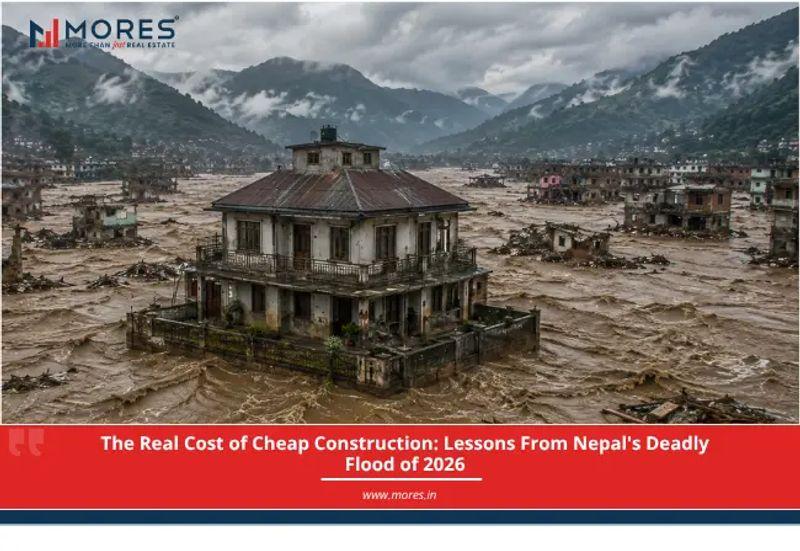
A natural disaster can expose vulnerabilities that are not apparent during non-disaster circumstances. With the mortality and destruction caused by the Nepal floods of 2026, questions arise regarding the quality of construction, the resilience of structures, and the ramifications of cutting corners on the construction itself. This August 2026 disaster was devastating for Nepal, leading to widespread destruction of homes, roads, bridges, and other infrastructure. It was a very unusual event with immense amounts of water and debris, so blaming it on cheap construction was not an appropriate statement. But the disaster has been a lesson for the real estate industry that the lowest construction cost is not necessarily the lowest life cycle cost. When it comes to home and property, it's crucial for homeowners and buyers to focus on engineering, location, materials, drainage, and regulatory compliance, rather than price and aesthetics
Nepal floods and the unspoken price of building
The resilience of a building is dependent on several factors. The building's structure, foundation quality, the quality of the building materials, the workmanship, and site conditions may all affect the performance of a property during a severe weather event.
The distinction between cost-efficient construction and unsafe cost-cutting is very significant.
Cost can be kept down by efficient building, based on better plans, technology, bulk purchasing, and project management, without sacrificing safety. Issues occur when savings involve required structural or safety elements. Areas of importance that should never be sacrificed are:
- Structural engineering and design
- Foundation quality
- Appropriate construction materials
- Skilled workmanship
- Reinforcement and concrete quality
- Waterproofing
- Stormwater drainage
- Site preparation
- Regulatory compliance
- Regular maintenance
The savings during construction can be small compared to the amount of money that needs to be spent on later repairs or reconstruction.
The viral green house and the Nepal greenhouse misconception
One of the most talked-about incidents in the Nepal floods was the case of a house painted green that stayed standing while the neighboring areas were wrecked.
Numerous photos were taken of the house, and it was noted that the house seemed to be surrounded by debris and some floodwater, while most of the area around the house was severely impacted.
Also being searched in this story is the term Nepal greenhouse. However, the structure was a residential house, not a greenhouse used for agriculture.
It's a fascinating survival, but it would be wrong to attribute any one construction method as the reason the house is flood-resistant. The performance of a building in an extreme event may be dependent on a variety of factors, such as the exact location of the building, foundation, structural design, ground conditions, surrounding terrain, and direction and force of the water.
Until a detailed study of its structure can be made, it is impossible to say what the final reason for its survival is.
The overall lesson is, however, helpful: Do not make decisions about a property's resilience based on appearance or cost.
Why location matters as much as construction quality
A good building design can cause a lot of trouble if the building is built on an inappropriate site.
Natural hazards can be more likely to affect properties in areas near rivers, floodplains, unstable slopes, and poorly drained areas. In the event of heavy rain or flash flooding, water can pick up mud, rocks, trees, and other debris, adding to the forces that will be applied to buildings.
The Nepal floods highlight the importance of site-specific risk assessment in due diligence for properties.
Buyers should think about the following before buying a property:
- The flood history of the area.
- Distance from Rivers and, drains, and other water bodies
- The characteristics of the ground and soil in the vicinity.
- Good stormwater drainage.
- Accessibility during extremes of weather.
- Arrangements for water to flow down through the basement and onto the ground below.
- Development and building regulations that are applicable.
The above factors are not only applicable in Nepal but also in the fast-growing cities of India.
Building codes are essential for safer construction
Building codes are not recommendations; they are mandatory. They set technical requirements that are meant to enhance the safety and performance of buildings.
The Department of Urban Development and Building Construction (DUDC) in Nepal has a National Building Code (NBC) that addresses various aspects of building design and construction.
The Bureau of Indian Standards also has a National Building Code of India 2016. The code applies to structural design, construction, fire and life safety, building services, as well as building planning.
If you are a property owner, then this translates to the fact that when you are planning to purchase a new/expensive building, its safety should not automatically be taken for granted.
The key ones are: has the project been designed properly, has the right regulation been adhered to, and has there been competent professional involvement.
What Indian residential buyers can learn from the Nepal flood house
There are some practical lessons to be learnt from the Nepal flood house for buyers of property in India.
1. Look beyond luxury finishes
Whilst a residential property may be desirable due to the quality of the floors, the façades, the landscaping, and modern facilities available, this is not indicative of its structural strength.
Prior to buying a property, the buyer should delve into the basics of construction.
2. Research the developer
Useful information can be gleaned from a developer's reputation and track record. While taking a comparison of the best construction companies in India, buyers should take a look at something more than just brand visibility.
Also consider project-specific approvals, construction specs, quality protocols, delivery records, and maintenance schedules.
To know more details about top real estate developers and projects, visit Mores.
3. Examine drainage
Drainage is especially critical when the rains are heavy in the planned investment area. It is important for buyers to be aware of the rainwater collection and discharge of a project.
Low parts of the site, such as basement areas, parking areas, etc., should be given special consideration.
4. Verify project documents
You should check relevant documents; they might include:
- RERA registration details, where applicable
- Sanctioned building plans
- Relevant approvals
- Completion or occupancy-related documentation
- Property title and ownership documents
- Developer disclosures
Additional protection for buyers may be provided by conducting professional legal and technical due diligence prior to investing in real estate.
Cheap materials can create expensive problems
Using a lower-cost material does not automatically mean that construction is unsafe. Materials should be evaluated according to their intended application, specifications, and quality standards.
The real concern is uncontrolled cost-cutting.
Compromising structural detailing, workmanship, waterproofing, drainage, or maintenance may reduce the initial expenditure but increase long-term risks.
Potential consequences include:
- Higher maintenance expenses
- Water damage
- Structural deterioration
- Repeated repairs
- Reduced property value
- Disruption for occupants
- Expensive reconstruction
Thus, it is not the goal to build at the lowest possible cost. It should be for the best affordability, quality, durability, and safety.
Conclusion
The 2026 Nepal floods are not just a case of "cheap construction. This disaster was caused by forces which were extraordinary in nature, and whose destruction cannot be explained by construction cost alone.
It does, however, give a valuable lesson to builders and purchasers of properties: the quality of the building work, engineering, location, and resilience are important.
The green residential house that survived the disaster has become a symbol of resilience, but it should not be assumed that this is a single story.
The message for Indian homebuyers can't be clearer. Don't assess a home just based on its price, looks, and facilities. Look at its build quality, site, drainage, documentation, developer background, and compliance with standards.
The true price of a low-priced building is not the cost saved in the first year. It is the potential cost incurred in the future for repairs, durability, property value, and susceptibility.
Recent Blogs
Get Expert Property Advice



Assistant


