

The Rise of Smart Homes and Their Impact on Today’s Housing Market
Jan 6, 2025
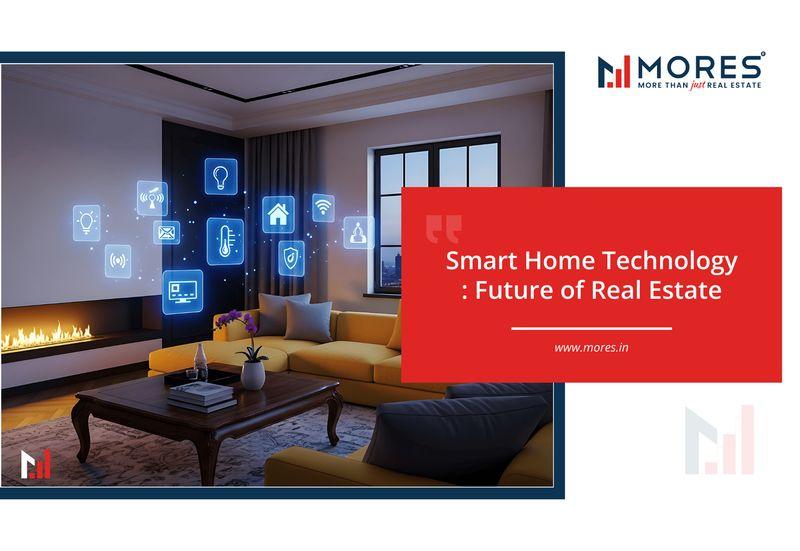
Technology is no longer confined to offices and devices; nowadays, it is an inseparable part of our lifestyle, jobs, and communication with the world. One of the greatest transformations that has been brought about by the evolution in technology is in the houses that we live in. The modern houses are not simple home bodies, but they are evolving into smart ecosystems, which are targeted towards increasing the comfort, safety, and efficiency in homes. The development of smart homes is the result of this transformation, and the trend is rapidly transforming the real estate market in the world and establishing new standards of what customers expect out of modern housing.
What Is a Smart Home?
A smart house is more than just a simple internet connection. It is defined as a home that is fitted with linked devices, sensors, and automated programs that can be operated remotely either via smartphones, tablets, or centralized systems. These gadgets are able to communicate and interact with one another to provide a seamless living experience that enables the homeowners to monitor, regulate, and automate daily activities at a small expense.
Smart homes combine light, climate control, security, appliances, and entertainment systems into a single digital network. It is not only convenience, but smart living, where the house is intelligent and adapts to the needs and habits of people living in it.
The Reason behind the popularity of Smart Homes
The adoption of smart homes is very fast because of the evolving lifestyle, urbanization, and the desire to get an efficient, secure, and personalized living space. The modern generation of buyers wants houses that can correspond to their digital life, and therefore, smart features are a great necessity and are not a bonus.
Key benefits of Smart Home
- Enhanced Security and Peace of Mind:- Security is one of the most important factors for people to buy smart technology.
- Remote Surveillance: Smart cameras and surveillance systems allow the owners of houses to view the activities that are going on in the house remotely.
- Instant Alerts: In case of an emergency, one can react quickly and use motion sensors, an intrusion detection system, along with fire alarms to deliver instant notification on a mobile device.
- Smart Access Control: Digital locking systems allow homeowners to grant or deny access remotely, track access records, and eliminate the need for physical keys.
- Incomparable Convenience and Comfort:- Smart homes simplify day-to-day living because of the automation of everyday routines.
- Remote Operation:- It enables the residents to turn off or on lights, temperature, or appliances before returning home.
- Voice-Based Controls:- Voice assistants help the user save on manual labour and control the device by simply speaking to the device.
- Smart Living:- Entertainment units, lighting, and environmental interior can be synchronized to offer a customized environment that encourages either leisure or work.
- Energy Efficiency and Cost Savings:- Sustainability is currently a major concern in modern housing, and smart houses can play significant roles in saving energy.
- Smart Climate Control: Smart thermostats can learn about the habits of users and automatically adjust the temperatures, and can save unnecessary energy.
- Automatic Lighting: Motion lighting ensures that power is not used when it is not necessary.
- Renewable Energy Integration: Smart systems can communicate with the solar power plants to streamline the production and consumption of energy.
- Accessibility and Support for Ageing Populations:- The ageing population is also being addressed through the innovation of smart homes.
- Voice-enabled business: The physically challenged will be able to use voice to operate the appliances.
- Remote Health Monitoring: Smart devices can alert the residents to take medication or alert a caregiver in case of an emergency.
- Aging-in-Place Solutions: The elderly people can be safe and secure, and keep in touch with their family members or health workers.
- Increased Property Value and Market Appeal:- Increased Property Value and Market Appeal.
- Higher Purchase Rates: The technology-enabled properties appeal to the customers of this century that appreciates connectivity and automation.
- Future-Proof Investment: Installing digital infrastructure in homes will not render them obsolete amidst changing technology.
- Competitive on the Market: Smart features are a difference that works in the already saturated urban markets, and often command a high price.
How Smart Technology Is Transforming the Real Estate Sector?
The advent of a smart home is not just changing the lifestyle of the people- it is changing the mode of organization, advertisement, and sale of real estate.
- New-Age Developments:- The current construction developers are developing new buildings with automation-based infrastructure, including installed sensors, smart wiring, and centralized control systems. This will ensure that technology becomes part of construction, not an added value.
- Intelligent Renovation of Existing Homes:- Consumers have been retrofitting old houses with smart systems, so as to keep in touch with the real estate market. Smart lighting, digitized security, and energy-management systems are now quite common in renovations.
- Reconfiguring Buyer Expectations:- The current consumers are media savvy and require homes that can redefine their connected lives. Homes that are not smart might find it difficult to compete with home-based technologies.
- Redefining Modern Luxury:- Luxury housing is no longer a matter of size or location. Rather, smooth automation, customized spaces, and smart technologies are emerging as the new references to high-end living.
How the IoT and Artificial Intelligence can be used in Smart Homes
The term "smart homes” is actually the interaction of Artificial Intelligence (AI) and the Internet of Things (IoT). Collectively, the technologies enable homes to transcend automation and provide predictive and learning-based experiences.
- Behavioral Learning: It is possible to program systems to observe the habits of the residents and make changes automatically (lighting, temperature, or schedules).
- Predictive Maintenance: AI is capable of monitoring the abnormal behavior of appliances and letting the owners know when something is wrong before it breaks down.
- Smart Resource Management: Homes use smart data to optimise the consumption of electricity, water, and heating.
- Individualized Environments: Each member of the family can have a room customized to his or her preferences.
- Such intelligence transforms houses into dynamic spaces that become modified along with their residents.
Smart Urban Development and Smart Homes
With urban growth, environmentally conscious housing is becoming very important. Smart homes can help in the eco-friendly urbanization in that they:
- Necessary minimization of unnecessary energy use.
- Promoting the use of renewable energy.
- Minimizing resource waste
- Promoting green buildings.
Why Smart Homes Will Become the Future of Real Estate Investment
To investors, smart homes do not act as a technological fad, but they represent a change in demand in housing. Smart properties will be ones capable of:
- Have increased resale capacity.
- Draw in quality tenants who are ready to pay higher rents.
- Stay pertinent in the changing expectations of buyers.
- Provide sustainable and long-term cost savings.
With the globalization of digital lifestyles, technology-functional homes will become the new era of real estate developments.
Conclusion
Smart homes are no longer a part of the future fantasy, but they have become a reality today. They are redefining the way people relate to their areas of residence through automation, connectivity, and intelligent systems. These houses are more secure, convenient, sustainable, and long-term; this is what makes them the staple of the new real estate.
Following the ever-increasing trend in technological innovation, the digital and physical lifestyles will increasingly intertwine. Homes will not merely accommodate them but comprehend and aid them, and also adjust to them. The future of real estate is in this transformation, whereby real estate is not merely constructed, but designed to be intelligent in order to transform as human needs change.
Recent Blogs
Get Expert Property Advice



Assistant


