



EXPLORE REAL ESTATE INSIGHTS FOR SMART MOVES AND INFORMED CHOICES
Your Guide to Trends, Market Tips, and Property Investment Advice
Top Interior Design Trends for Modern Homes in 2026
Jan 6, 2025
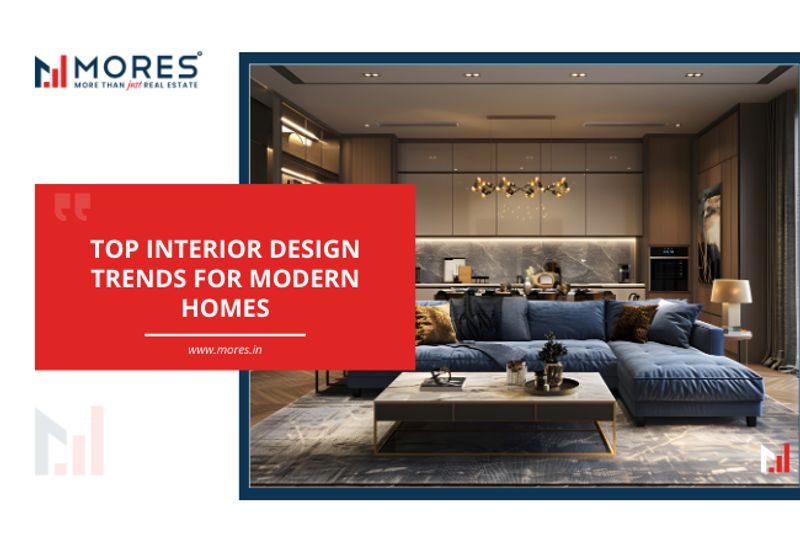
The scenario of interior design is changing at a very high rate, in consideration of the evolving lifestyle and technology. The homes of the modern era have ceased to be mere aesthetic structures- they are being created as work-structures, wellness spaces, flexible, urban-changing, personalised spaces of identity. According to global design discourse and observed trends in the industry, there is a definite move towards comfort-based minimalism, environmentally friendly materials and technology-based living areas.
Warm Minimalism Substituting Cold Minimalism
Minimalism is no longer plain white walls and bare spaces. Homeowners are instead taking on a gentler and more inviting perception commonly referred to as warm minimalism. This style puts emphasis on clean lines, but with a texture, muted colours, and a natural material to provide comfort without clumsiness.
Design discourses record a shift towards more welcoming and habitable as opposed to strictly minimal space.
Key elements include:
- Neutral earths like beige, clay and sand.
- Rough finishes as opposed to smooth ones.
- Seated furniture: plain sculptural design.
The pressure to have relaxing, low-stress environments is evident in this movement, particularly in urban homes where space is minimal.
Sustainability as a Principle Design
Green design is not a fringe option anymore; it is becoming mainstream interior design. Designers and homeowners are laying emphasis on materials and solutions which minimize effects on the environment and enhance long-term sustainability. Eco-friendly resources, finishes with low VOC, and energy-saving solutions are becoming a necessity and not a luxury.
- Trendy eco-friendly characteristics:
- Flooring made of reclaimed wood and bamboo.
- Natural stone and clay-based finishes.
- Lighting systems that are energy-efficient.
- Home-made decoration in favour of artisans.
Sustainability is now compatible with environmental responsibility as well as aspirational living.
Emerging Smart, Technology-Mixed Interiors
Technology is being integrated into interior design and is not being perceived as an addition. The use of automation in modern homes is being done invisibly to uphold the aesthetic harmony. The most common integrations involve:
- Discreet intelligent speakers and lighting mechanisms.
- Automated power curtains and temperature.
- Electric floors installed in furniture.
This is indicative of the general move towards homes that are not only beautiful but also responsive and intelligent.
Customised Spaces More than Catalogue Homes
One of the main tendencies is the refusal to use mass-produced interiors that look the same. There is a growing desire among homeowners to have spaces of individuality, culture and experiences. Examples of customisation in design:
- Custom furniture with modern and traditional forms of making.
- Exhibition of locally handmade decorations and art.
- Lifestyle-oriented designs as opposed to the standard designs.
This trend underscores the emotional aspect of designing homes.
Shapes and Curved Forms Organic Shapes and Curved Forms
The language of design is becoming less sharp and more organic, with nature influencing the design. The curves have been welcomed into furniture and architectural details to form a visual movement and comfort. Key applications:
- Rounded sofas and curved tables.
- Arched doorways and mirrors
- Fluid structures that promote mobility and transparency.
All these elements make it a relaxed human environment.
Patterned Walls and Coated Surfaces
The flat painted walls are slowly being taken over by the use of tactile finish that gives interiors depth and character. Trending wall treatments:
- Clay or lime-based coatings
- Fabric or fluted panels
- Stone or micro- cement finishes.
Textures enable even the slightest spaces to be vibrant without over-ornamenting them.
Statement Lighting as Functional Art.
Lighting is no longer a practicality and has become a leading design element. Spatial identity is currently characterised by sculptural lighting installations. The contemporary light types are:
- Clustered pendant lights
- Geometric chandeliers
- Concealed LED lighting to produce ambient lighting.
Lighting is now influencing mood, zoning and visual narration in the house.
Hybrid Living Multifunctional Space
Due to remote working and life flexibility, houses are being built in such a way that they can accommodate more than one use in a single space.
Examples include:
- Living rooms that are used as workstations.
- Folding furniture in small urban houses.
- Modular storage that can be changed to suit changing needs.
This is an indication of the way design is keeping up with the changing behavioural patterns instead of routine.
Wellness Design through the Senses
The emotional and psychological well-being is becoming more and more related to interior design. Designers are designing in such a way that will attract all the senses, and not just the sight. The emphasis on the home's feeling is rising, with the use of textures, plants, and lighting to come up with a relaxing environment. The wellness-focused elements:
- Green design and biophilia.
- Fabrics and layered clothes are soft.
- Natural light optimisation
The house is becoming healing in that it is able to offset the busy lifestyle in the cities.
Fusion and Integration of Local Crafts Cultural
The other trend is the merging of modern design and local artistry. Rather than the traditional and modern, the interiors are coming together. Examples are:
- Sparsely furnished design and hand-made decorations.
- Modern furniture in traditional carved wood.
- Native resources are incorporated into the modern environment.
This is a method of preserving heritage and, at the same time, ensuring global appeal.
Colour Tales Going Beyond dull neutrals
Although neutral colours are still in fashion, designers are exploring colour-filled rooms and tonal stacking. Individual bold colours that are stacked in walls, clothings and furniture have entered some interiors as a dramatic effect. Trending palettes:
- Dark greens and terracotta colours.
- Muted blues and warm greys
- Equity: monochromatic layering of cohesion.
It is using colour to strategically generate immersive environments.
Design That Promotes Life Span and Flexibility
The trend in modern interiors also drifts toward the future-oriented - more in terms of durability and adaptability than in short-lived trends. This includes:
- Adaptable furniture that goes with the times.
- Quality raw materials that are long-term.
- Family change layouts.
It has now been viewed as a kind of sustainability and financial soundness.
The Reason These Trends are Important to the Future of Housing
They are design changes that are an indication of a greater change in the perception of the homes. Instead of being fixed structures, they are evolving to be:
- Technologically flexible.
- Responsive toward environmental responsibility.
- Disposition toward emotional well-being.
- Reflective of personal identity.
Interior design has ceased to be mere decoration and is now becoming a strategic part of these issues, which are lifestyle planning and creating real estate value. All these cater to the idea of a smart house. For more details, you can read (The Rise of Smart Homes and Their Impact on Today’s Housing Market)
Conclusion
The interior design scenery of the year 2026 is the seamless combination of sustainability, technology, and the human-centred lifestyle. Between warm minimalism and intelligent integrations on the one hand, and personalised furnishing and wellness-based spaces on the other, the modern home is being redefined as a smart, versatile ecosystem, instead of a fixed one.
With the rising pace of urbanisation and increased digitisation of lifestyles, interior design will further develop along the line of solutions that will not only be innovative but also comfortable. The houses of tomorrow will not just be beautiful, but will contribute positively to the way in which people will live, work and feel in them.
Recent Blogs

Assistant


