


EXPLORE REAL ESTATE INSIGHTS FOR SMART MOVES AND INFORMED CHOICES
Your Guide to Trends, Market Tips, and Property Investment Advice
Why Time in the Market Matters More Than Timing the Market in Real Estate
Jan 7, 2025
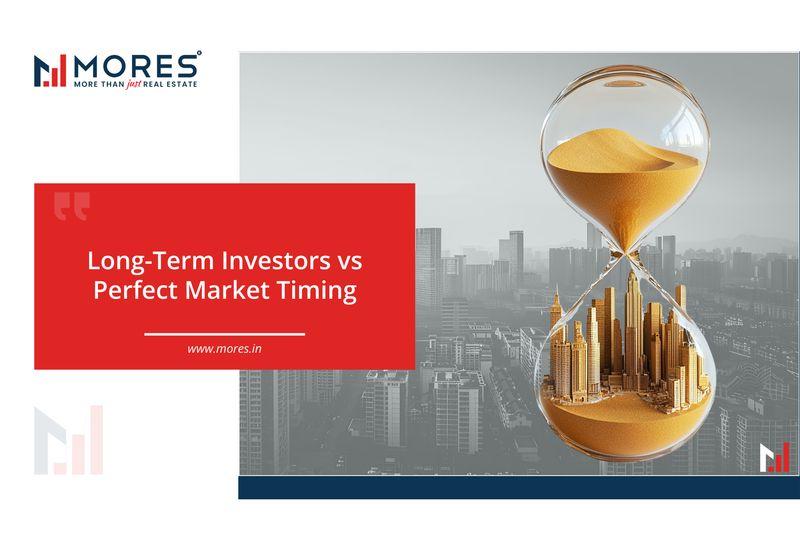
The need to possess a house is ingrained- be it the aspect of financial stability, emotional stability, or the need to leave a legacy to be used in the future. Nevertheless, the process of purchasing a house is not risk-free. A potential consumer is always caught in a circle of queries: Is it time to purchase? Will I wait till the prices are down? What would happen if interest rates were better the following year? This unremitting effort to time the market is often the cause of inaction. As a matter of fact, in the scenario of real estate, being in the market is much more productive than making assumptions about when to enter the market.
What Does It Mean to be In the market?
Market presence just refers to the possession of property and maintaining it over a period, instead of standing on the periphery until the market moves into the perfect state. Real estate investment is also long-term. The prices of property are not developed to move quickly like stocks and are, rather, in most cases, going to accumulate over long durations.The owner of a property enjoys the benefits of a gradual increase in value, accumulation of equity, and possible rental income. It is not about catching the market at the lowest end of the market, but playing in the long-term upward mobility.
The reason Timing the Real Estate Market seldom works
It is difficult to guess when it will be the most appropriate moment to purchase property--in many instances, it is not possible. The factors that interact in a complex manner to affect the real estate market are the interest rates, inflation, employment, government policies, infrastructure development, and the economic conditions in the world. It is not possible to predict with a certain expert how all these factors will interact with each other in the future. Though one factor may work in your favor, there is another factor that may counter it. Consequently, it is a common case to miss real opportunities by waiting for the right moment.
Opportunity Cost of Waiting
Any year in the waiting is a year of foregone equity growth. As buyers are waiting for the prices to be fixed, there is the possibility that property values will keep increasing in bits. This is an opportunity cost that is hard to recover later because this was a lost appreciation.
Also, with the increase in prices over time, buyers will find themselves paying a high price for a property that they would have bought at a lower price back in the past.
The Volatility of the market is inevitable
Economic slump, change in regulations, natural calamities, or local zoning laws are unpredictable interference in the real estate markets. It is the unexpected events that may ruin even the most thought-out timing strategy. The long-run ownership is much more effective than the delayed entry in absorbing short-run volatility.
The Time to Change the Market
The historical data always accounts in favor of the fact that the prices of real estate are inclined to an increase in the long term. Under the expert projections on the basis of the Fannie Mae Home Price Expectations Survey (HPES), it is predicted that home prices will keep increasing in the next five years, but in a more moderate manner than the previous jumps. This low but consistent growth lends credence to the need to get into the market early and own property over time. Even a small yearly appreciation grows even more over a period of several years.
What This Means to You as a Buyer
A practical example is to be taken. Assume that you buy a house in 2024 that is priced at 400,000. According to the estimated growth patterns, the value of the property is likely to increase at a slow pace in the next five years. A conservative rate of appreciation can give rise to a significant rise in net worth.
More to the point, when you own a home, it enables you to accumulate equity each time you make a mortgage payment. Renting, on the other hand, involves paying monthly fees without accruing ownership or capital gains. However, in the long run, homeowners would enjoy both the appreciation and repayment of the loan, whereas renters will keep funding the investment of another person.
Don’t Let Fear Hold You Back
The uncertainty in the market usually causes hesitation. Fear of interest rates, affordability, or possible corrections in prices may result in inactivity due to fear. Although care is a virtue, too much fear may make buyers fail to make prudent long-term decisions. The investment in homeownership has always been a pay-off in the long term. Spending time waiting until the right time can result in an increase in prices, competition, and a lack of options. It is not always useful to be passive, but a calculated, educated step can be helpful.
How to Successfully make a First Move to becoming a homeowner.
- Explore Multiple Options:- Do not confine yourself to one kind of property or place. Each of the condominiums, townhomes, single-family houses, and mixed-use developments have their proximate benefits. Upon widening your consideration, you can find more opportunities that can meet your budget and objectives.
- Think over developing/low-cost areas:- Very desirable neighborhoods would be sold at a high price. Investing in emerging regions where the infrastructure will have high plans can be more valuable and have higher value in the long run.
- Take a Look at Down Payment Assistance Programs:- There is a multitude of local and national grant programs that assist first-time buyers with down payments. Such programs can greatly lower the cost of acquiring a house and make it more affordable.
- Collaborate with senior Real Estate Professionals:- Experienced real estate agents offer informative information regarding market trends, property values, and negotiation techniques. They can use their knowledge to locate the appropriate property and purchase it with ease in the shortest time possible, and reduce risks.
The Emotional Benefit of Homeownership
Homeownership has a strong emotional and lifestyle value that is often not taken into consideration, even beyond financial factors.
- A Place to Put Down Roots:- A house is a place of stability, security, and belonging. It turns into the premise of family life, personal achievements, and long-term memories. In the course of time, it becomes a burden rather than an asset.
- Freedom to Customize:- Having a home gives total creativity. Homeowners have the choice to create their living environment to resemble their personality and lifestyle choices based on the wall colors and flooring, the landscaping, and interiors.
- An Intangible Investment in the Future:- Real estate is tangible, unlike most of the financial assets. The fact that your home will gain value with time gives you the rightful sense of pride and achievement that makes your home a worthy investment in the long run.
- Improved Quality of Life:- Homeownership can also create a more favorable living situation, such as increased space and personal outdoor space, work-at-home structures, and family-friendly plans. This domination of living conditions helps to make the lifestyle rich and balanced.
Addressing Common Concerns About Buying a Home
- Rising Interest Rates:- Although the interest rates have been on the rise over the recent periods, they are still rather low in comparison with the past. It is also in the interest of the buyers to seek alternatives like adjustable rate mortgages, refinancing, or the relatively low priced properties that will enable them to control the cost of borrowing money.
- Affordability Challenges:- The increase in the price of houses is a valid point. Nevertheless, there remain cheap deals in markets less strong, smaller units or different housing models including townhouses and condos.
- Market Fluctuations:- Fluctuation of the market in the short-term is because of the nature of the property market, which is a long-term investment. Temporary fluctuations in prices are much less important where the ownership stretches over years or decades.
Conclusion
Though owning a house is not an easy task, its benefits both financial and emotional are enormous in the long run. The buyers can make stronger and better decisions by not focusing on trying to foresee the market trends but by shifting their minds to the importance of long-term engagement.
The equity, stability, and opportunity are accrued with time in the market. Instead of waiting and hoping to attain the ideal situation which may not come, making a move today can establish the base of a safe and fulfilled tomorrow.
In real estate, you only need to be in the market and then you need to have the correct timing of the market- and that is where that first decisive step to what you have been dreaming of is taken.
Recent Blogs


Assistant


