

Housing Prices Rise 59% as Construction Costs Increase 34% Across India’s Top Seven Cities
Sep 7, 2026
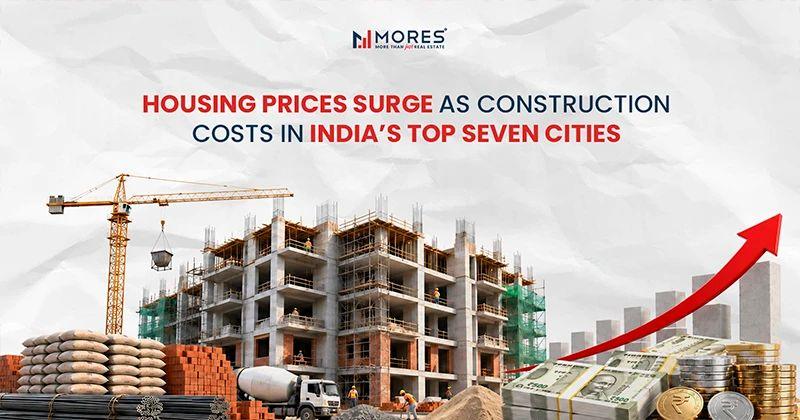
The prices of houses in India’s top seven cities have risen significantly relative to construction costs in India between 2021 and 2025, according to a report from ANAROCK. As stated in the report, the average increase in construction costs of standard-plus residential projects during the period was 34%, while average residential capital values grew by 59%.
As per the report, the average construction cost of building a standard-plus residential project rose from ₹2,681 per sq ft in 2021 to ₹3,604 per sq ft in 2025, which is a growth rate of around 6.9% compounded annually. Meanwhile, average residential capital values saw an increase from ₹5,826 per sq ft to ₹9,260 per sq ft, a CAGR of around 12%.
ANAROCK noted that the disparity between the growth of construction costs and residential capital values indicates a widening gap between the physical cost of constructing houses and their selling prices. The report attributed 66% of the increase in residential prices to construction expenses, while the remaining 34% was linked to factors including rising land costs, developer margins and changes in demand and supply dynamics.
Land prices have also become a critical factor that determines housing prices. As per the report, the land prices in the top seven cities, with a few exceptions, witnessed growth between 50% and 120% in the period between 2021 and the first six months of 2026. The National Capital Region saw a growth of 70% to 130%, and Bengaluru saw a growth of 60% to 120% in land prices.
The report also sheds light on the fresh burden faced by construction costs in India due to increasing prices of steel, fuel-based logistics, imported finishing materials, and mechanical, electrical, and plumbing elements. According to ANAROCK, all these factors have added an additional 8% to 10% to the total construction costs due to the Middle East tensions.
Amongst individual factors, finishing materials such as tiles, glass, and hardware have become around 8% to 12% more expensive, whereas MEP has witnessed an increase of around 9% to 13%. The labour charges, which contribute about 25% to 30% of the total cost of the projects, have seen a comparatively modest increase of 5% to 6%. Cement prices have increased by about 4% to 5%.
For aspiring homeowners, tools like a construction cost calculator may be used to derive an indicative estimate of the construction costs depending on the project size and construction requirements. However, the costs of projects may differ based on the cost environment prevailing in the area as well as the cost of construction, including land prices, material costs, and so forth.
With rising costs these days, the situation is becoming difficult for developers, especially those with projects that have been completed and sold, as there is very little scope to pass costs on to customers. For newly introduced projects, there could be some scope for adjusting prices as per the prevailing situation.
There may be variations in the effects of rising costs among the various housing segments. Premium and luxury housing may have more scope for accommodating higher costs, as people in these housing segments do not give much importance to pricing issues. On the other hand, any increase in housing prices in India would add to affordability issues.
According to the findings from the report, developers are expected to use strategies of price increase, optimizing project specifications, product mix modification, and timing and location of launches.


Assistant


