
Premium Housing Demand Rises as Mumbai Records 13,029 Property Registrations in February
Mar 11, 2026
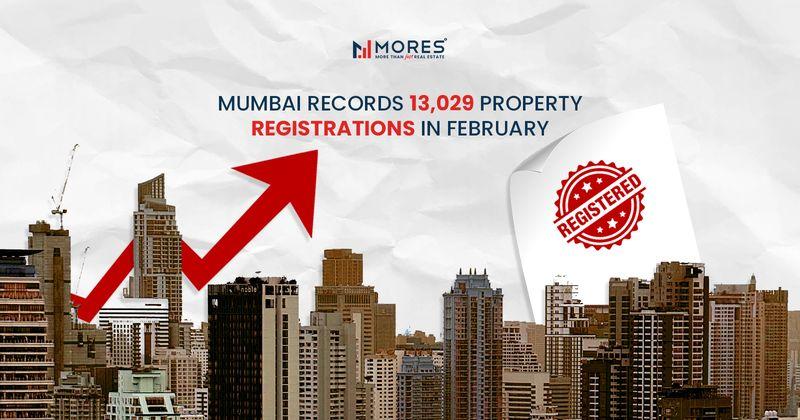
In February 2026, the residential real estate business in Mumbai registered steady growth, and property registration and stamp duty collection registered remarkable growth. Knight Frank India accessed data on the Maharashtra Inspector General of Registration, which recorded 13,029 property registrations in the city in February 2026, with an 8 percent year-on-year (YoY) increase from the 12,066 property registrations in February 2025.
Government income from property transactions also increased substantially, along with the increase in registration. Stamp duty collections were over 1.134 crore in February 2026, an increase of 21% YoY over the corresponding collections of 935 crore in February 2025. Registrations grew by 16 on a month-on-month basis, and stamp duty collection grew by 12, which reflects the to-go momentum in the housing market in the city.
The growth is attributed by industry experts to the continued end-user demand and better buyer sentiment, as supported by stable economic conditions and the development of infrastructure throughout the city. As per Knight Frank, close to 80 percent of total property registrations were residential, which highlights the power of the housing segment of the Mumbai property market.
Speaking of the market performance, Shishir Baijal remarked that the February performance is more of a structural direction and not a spurt. He has pointed out that demand has remained generally user-focused, with mid-to-premium housing segments taking on a growing momentum in the market.
The market statistics also indicate that there is an evident change in the preferences of buyers for higher-value homes. Knight Frank reported that the proportion of properties valued over ₹5 crore rose to 8 percent in February 2026; the same value was 6 percent a year ago. In the same way, the 2-5 crore segment increased to 20 percent, and 1-2 crore was at 33 percent, up to 31 percent, respectively.
Conversely, the sub-1 crore segment recorded 40% of total registrations, as compared to 46 the previous year. This trend is an indication that the buyers are progressing further along the value chain, which is an indicator of increasing incomes, escalating housing expectations, and enhanced assurance of long-term investment in property ownership.
Although there is a trend toward more value homes, compact apartments remain the most common transaction volumes. The number of properties registered totalled to 81% in February 2026, with properties up to 1,000 square feet. In this category, the most popular size was between 500 and 1,000 sq ft, with the highest proportion of registration being 45 percent of all registered buyers, as they sought a compromise between affordability and the area they could utilize.
Residential activity was still focused in the suburban areas in Mumbai, geographically. The Western Suburbs continued to be the busiest housing area in the city because of the improved connectivity, increased project supply, and the variety of housing. The Central Suburbs also assisted with totals of property registration; however, the core city markets still have a comparatively smaller portion owing to the restricted provision and higher entry cost.
Comprehensively, analysts think that the most up-to-date data represents a stable and changing residential market in Mumbai. As infrastructure continues to grow, the suburbanization of the city increases, and more people gain the confidence to buy houses, the housing market in Mumbai should see consistent growth over the next few months, which further solidifies the status of Mumbai as one of the most stable real estate markets in India.


Assistant


