

Carpet Area vs RERA Carpet Area: Knowing the Difference Before You Buy
Nov 24, 2026
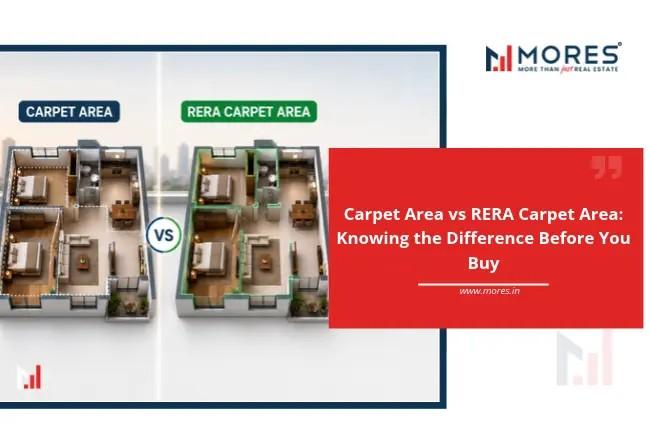
Home buying is one of the most important financial investments you will make in your life. Carpet area is an important factor buyers should consider when purchasing a property, as it directly impacts their lifestyle. Unfortunately, many home buyers get mixed up with the other dimensions like built-up area, super built-up area, and carpet area as per RERA. This misconception can lead to a misunderstanding of just how much space a residence will actually provide.
Since the implementation of the Real Estate (Regulation and Development) Act (RERA), developers are required to disclose property sizes using a standardized definition. Understanding the difference between traditional carpet area and RERA carpet area helps buyers compare properties fairly, evaluate their investment accurately, and avoid misleading marketing claims.
How to Understand Carpet Area?
Many first-time buyers ask, what exactly is meant by carpet area?
Carpet area is the actual usable floor area within the walls of an apartment where you can place furniture, walk comfortably, or literally lay a carpet. It represents the livable space available inside your home.
Traditionally, carpet area covers:
- Bedrooms
- Living room
- Dining area
- Kitchen
- Bathrooms
- Internal passages
The carpet area, as you can see, gives the buyer a realistic idea of the amount of space that they are getting.
What is RERA Carpet Area?
In order to clear any possible confusion in the measurement of the property, RERA has come up with a standard definition of RERA carpet area.
RERA carpet area is calculated as per the RERA definition, which means that the net usable floor area of the apartment will be calculated excluding:
- External walls
- The area of balconies or verandahs.
- Open terrace
- Common areas
This legal definition ensures that every developer measures apartments using the same method, making property comparisons much more transparent.
RERA carpet area not only offers uniformity for all registered residential projects but also supersedes the different measurement norms followed by builders in the past.
Carpet Area vs RERA Carpet Area
Although these terms are often used interchangeably, there is one significant distinction.
Carpet Area
RERA Carpet Area
General industry term
Legally defined under RERA
May vary between builders
Uniform across all RERA projects
Sometimes excludes internal partition walls
Includes internal partition walls
No standardized measurement
Standardized nationwide
The only technical difference is that RERA carpet area includes the thickness of internal partition walls.
For example:
- Traditional carpet area: 980 sq. ft.
- Internal partition wall area: 20 sq. ft.
- RERA carpet area: 1,000 sq. ft.
In most apartments, this difference is between 2% and 5% depending on the apartment's layout.
The difference may appear to be insignificant, but it makes a tremendous difference in being transparent in a property transaction.
Why Does Carpet Area Matter?
The carpet area is crucial as it indicates the space that you will use daily.
A larger super built-up area doesn't necessarily mean you'll have a larger home. In real estate, the developers tend to also add common areas when promoting their super built-up apartment spaces, making it seem like the usable space is larger.
Knowing the carpet area allows buyers to:
- Compare multiple apartments fairly
- Estimate furniture placement
- Understand room dimensions
- Evaluate value for money
- Avoid misleading advertisements
In today's market, house buyers focus more on carpet area than super built-up area in all property purchasing decisions.
How to Calculate Carpet Area and RERA Carpet Area
Another common query that many buyers have is how to calculate the carpet area.
It is simple to calculate.
Carpet Area = Total Internal Usable Floor Area
It includes:
- Bedrooms
- Living room
- Kitchen
- Bathrooms
- Utility spaces
- Internal passages
It excludes:
- External walls
- Balcony
- Terrace
- Common staircase
- Lift lobby
- Clubhouse
Example
Suppose an apartment has:
- Living room: 220 sq. ft.
- Bedroom 1: 160 sq. ft.
- Bedroom 2: 145 sq. ft.
- Kitchen: 95 sq. ft.
- Bathrooms: 65 sq. ft.
- Passage: 55 sq. ft.
Carpet Area = 220 + 160 + 145 + 95 + 65 + 55 = 740 sq. ft.
If the internal partition walls occupy 15 sq. ft., then:
RERA Carpet Area = 755 sq. ft.
This example clearly demonstrates how to calculate carpet area & RERA Carpet Area, and understand the difference between traditional and RERA measurements.
Why RERA Carpet Area Benefits Homebuyers
Before RERA, developers would label apartments as either built-up or super built-up area, which would make it difficult for the buyer to understand the actual usable area.
In today's era, RERA carpet area comes with some advantages:
- Standardized Measurement: All RERA-registered projects adhere to the same definition and therefore are comparable to each other.
- Better Pricing Transparency: They are paying for what they need and not "inflated common areas.
- Easier Property Comparison: When you compare apartments, it's much easier because everyone uses the same measurement method.
- Greater Buyer Confidence: A clear and open measurement system minimizes disputes between buyers and developers.
Common Myths About Carpet Area
Myth 1: Carpet Area Encompasses Balconies!
False.
Myth 2: Bigger Super Built-up Area Means Bigger Home
Not necessarily.
Explanation: A higher super built-up area may simply indicate larger common areas rather than additional usable space inside your apartment.
Myth 3: Carpet Area and Built-up Area Are the Same
Incorrect.
Explanation: Built-up area includes wall thickness and certain additional spaces, whereas carpet area only refers to usable floor space.
Tips Before Buying a Home
When considering residential real estate, remember the following:
- Always ask for the RERA carpet area instead of relying on the super built-up area.
- Check project information provided on your State's RERA website.
- Look at the apartment in terms of usable space, not square footage or size.
- Carefully read the floor plan.
- Know how to calculate the carpet area so you can check the measurements for yourself.
These are important measures you can take to make an informed and intelligent purchase.
Final Thoughts
Just like the location, price, and amenities of the property, knowing the carpet area and RERA carpet area is equally vital when buying a house. The distinction between traditional carpet area and RERA carpet area might not appear big, but the standardized carpet area definition set by RERA has definitely enhanced transparency in the real estate marketplace.
By understanding the significance of carpet area, knowing what RERA carpet area is, and learning how to calculate carpet area and RERA Carpet Area, homebuyers can compare properties accurately and make informed decisions. Rather than get caught up in awe of a sophisticated super built-up figure, consider the space you actually use for living that really makes your home comfortable and valuable.
A clear understanding of these concepts ensures that you invest in a property that meets both your expectations and your long-term needs.
Also Read: Rent Agreement Format
Recent Blogs
Get Expert Property Advice



Assistant


